Do you know the difference between an open lead-acid battery, a sealed lead-acid battery, an AGM battery or a gel battery?
We have often come across the question: Should I choose an AGM Battery or a regular battery? Another is asking a lot is, should I choose a gel battery or an agm battery? Let’s delve into these questions first, just before the technical section. What do you really want to know with a question like this?
AGM Battery or Ordinary Battery
In reality, a question like this could be in the form of: Should i choose a sealed lead-acid battery that is maintenance-free or a regular open-ended lead-acid battery?
A completely simple answer to this cannot be given, because it depends on the application in which it is to be used. In a car, a standard battery still works, but for the industry, we always recommend choosing an AGM battery, as this is first and foremost a matter of overall cost and reliability. The features of AGM batteries and jelly batteries are superior to a standard battery, but these acquisition costs are higher. However, maintenance-free and longevity combined with a neutral operating position make agm batteries a clear winner in terms of both cost and reliability.
Lead Battery technical operation
The operation of all lead-acid batteries is based on the same chemical reaction: During charging, the lead sulfate PbSO4 on the lead plates of the battery and the electrolyte converted into water are converted into lead Pb (negative plate), lead dioxide PbO2 (positive plate) and sulfuric acid H2SO4 by electric current. When the battery is discharged, the reaction is the opposite, the electric current flowing through the battery decomposes the sulfuric acid into water and the lead sulfate formed on both plates.
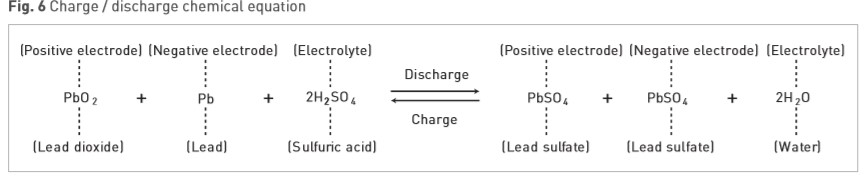
The essential difference between an open lead-acid battery and a sealed lead-acid battery
At the end of the charge, some of the hydrogen and oxygen in the sulfuric acid can no longer bind to water and are released as gas out of the battery if the battery is open. If the battery is a sealed AGM or jelly battery, the gases will not escape from the housing, causing them to re-circulate due to the recombination reaction.
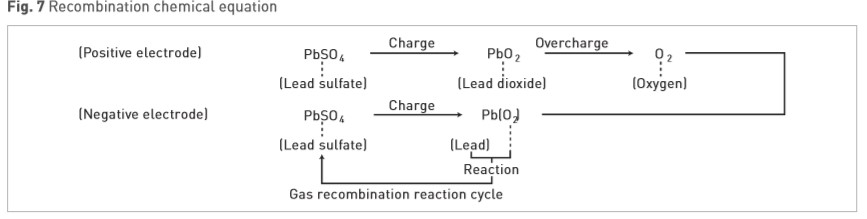
This recombination reaction is the essential difference between an open and a closed lead-acid battery and makes the sealed lead-acid battery maintenance-free. Since this recombination does not take place in a standard open lead-acid battery, so hydrogen and oxygen can be released, distilled water must be added to them if necessary.
AGM Battery or Gel Battery?
This is the second most common question we come across. Gel batteries, also known as jelly batteries, are identified by the label GEL, but are they significantly different from AGM batteries? Let's focus a little on their work next:
In sealed lead-acid batteries, the electrolyte is absorbed into a glass fiber mat (AGM) or gel (GEL, or gel or gel battery). AGM and jelly batteries are similar in structure except for this medium to which the electrolyte is bound. Both battery types have overpressure valves in the battery cover to expel any gas that may form inside the battery case in the event of a fault. In terms of electrical properties, AGM and jelly batteries are very similar.However, we recommend choosing an AGM battery over a jelly battery, as the jelly battery will withstand much lower current loads much less at low temperatures due to its higher internal resistance.

Key benefits of AGM battery and gel battery
The most significant differences between sealed lead-acid batteries (both AGM and jelly batteries) and open lead-acid batteries are:
• maintenance-free, no addition of distilled water
• long lasting
• operating position free (however, charging with the lid down is not recommended)
• leak-proof
• vibration resistance and impact resistance
• Charging speed many times that of a standard open battery